What office cleaning means for a good working environment and employee wellbeing
A clean office affects more than the visual impression. Office cleaning matters for the working environment, indoor climate, order, hygiene and employee wellbeing.
In a workplace where many people share meeting rooms, desks, kitchen facilities, toilets and common areas, dust, dirt and clutter can quickly affect everyday work. It can make the office less pleasant to use. It can also make it harder to maintain a consistent cleaning standard.
The employer has overall responsibility for the working environment. In practice, however, management, employees and the cleaning company all play a role. Management sets the framework. Employees keep things tidy during the working day. The cleaning company handles the agreed office cleaning of workspaces, common areas and office premises.
Cleaning is part of the physical framework of the workplace. When the office is clean and tidy, it is easier to move around, work and use shared areas without unnecessary friction.
A good working environment includes both the physical working environment and the wellbeing employees experience. Floors, meeting rooms, toilets, kitchen facilities, desks, air, noise and light all affect the overall experience of the workplace. Cleaning is therefore a practical part of the working environment employees meet every day.
A lack of cleaning can contribute to dust, dirt, unpleasant odours and a poorer experience of the office. This is especially noticeable in common areas, where many people use the same surfaces and facilities. That is why cleaning and the working environment should be considered together as a fixed part of daily operations.
Employees notice whether the office feels clean, tidy and comfortable. It is one of the things that may not take up much attention when it works well, but quickly becomes irritating when it does not.
Dirty common areas, dusty surfaces, overflowing bins and clutter on floors or tables can create small frustrations during the working day. The same applies to meeting rooms that are not ready for use, toilets that are not properly maintained, or a kitchen where food waste and rubbish are left standing.
A study from Wageningen University & Research examined cleanliness in office environments across five non-profit organisations in the Netherlands. The study used both questionnaires and objective measurements of cleanliness, including particle measurements in the air and assessments of surface cleanliness. The researchers found that higher objective cleanliness correlated with higher perceived productivity and higher job satisfaction.
For a company, this means that office cleaning can be part of the work to support employee wellbeing. Especially when the office is actively used by many employees, guests and business partners.
The indoor climate in the workplace is affected by several factors: air, temperature, dust, cleaning, ventilation, light and noise. It is also affected by people, printers, furniture, building materials, dirt and the activities taking place in the room.
Dust can settle on floors, desks, shelves, textiles, windowsills, cables, chairs and surfaces. In offices with many open shelves, piles of paper, fabric furniture and many users, dust can therefore quickly become visible.
Poor indoor climate in the workplace can appear as headaches, fatigue, irritated eyes, dry mucous membranes, respiratory discomfort, difficulty concentrating and general discomfort. These symptoms can have several causes. They may also be linked to noise, a busy workday, the psychological working environment or other conditions. But if the discomfort mainly occurs after longer periods in the office and decreases away from the workplace, it is relevant to look at the indoor climate. Here, cleaning is a concrete part of the solution.
Research in this area should be read with care. The studies mainly show connections between cleanliness, dust, symptoms, perceived productivity and satisfaction. They do not show that cleaning alone solves all problems with the working environment or indoor climate.
Still, they are relevant because they point to something many companies already experience in practice: the physical condition of the office matters in everyday work.
The study The effect of cleaning on dust and the health of office workers examined the effect of cleaning in office environments. The results showed that extensive cleaning reduced airborne dust in offices and could also reduce mucous membrane symptoms and blocked noses among office workers.
This suggests that cleaning can be a relevant part of improving indoor climate. Especially in workplaces where dust is a recurring problem, or where employees experience discomfort such as dry mucous membranes, irritated eyes or heavy air.
For companies, the point is simple: if dust gathers quickly, cleaning should not only be assessed based on whether the office looks presentable. It should also be assessed based on whether the cleaning level matches how the premises are used.
The study The work environment and workers’ health in four large office buildings examined links between environmental factors and office workers’ health in four large office buildings. The study highlights, among other things, the importance of maintaining a clean and uncluttered workspace. It also mentions that fungi in chairs was a factor that correlated with health effects.
The study is relevant for offices where clutter, many employees, textiles, chairs and shared surfaces can make cleaning more difficult. It also underlines that cleaning office premises is not only about floors and visible surfaces. Chairs, textiles, dust reservoirs and overcrowded rooms can also matter.
For an ordinary company, this means that cleaning-friendly interior design and tidy workstations should be included in the planning. The easier the office is to clean, the better the cleaning can be carried out.
As mentioned, the Wageningen University & Research study Impact of cleanliness on the productivity of employees found significant links between higher measured cleanliness, higher perceived productivity and higher job satisfaction among employees in office environments. The study describes that employees rated their own productivity lower when there were higher particle levels in the air and more dirt on surfaces.
This is relevant for companies working with employee wellbeing. Order and a well-functioning cleaning standard can support a workplace where employees experience fewer practical issues during the working day.
Office cleaning is most effective when it is based on the areas that are used the most. In an office, it is rarely enough to look only at the floors. Common areas, meeting rooms, kitchen facilities, toilets, desks and contact surfaces also matter.
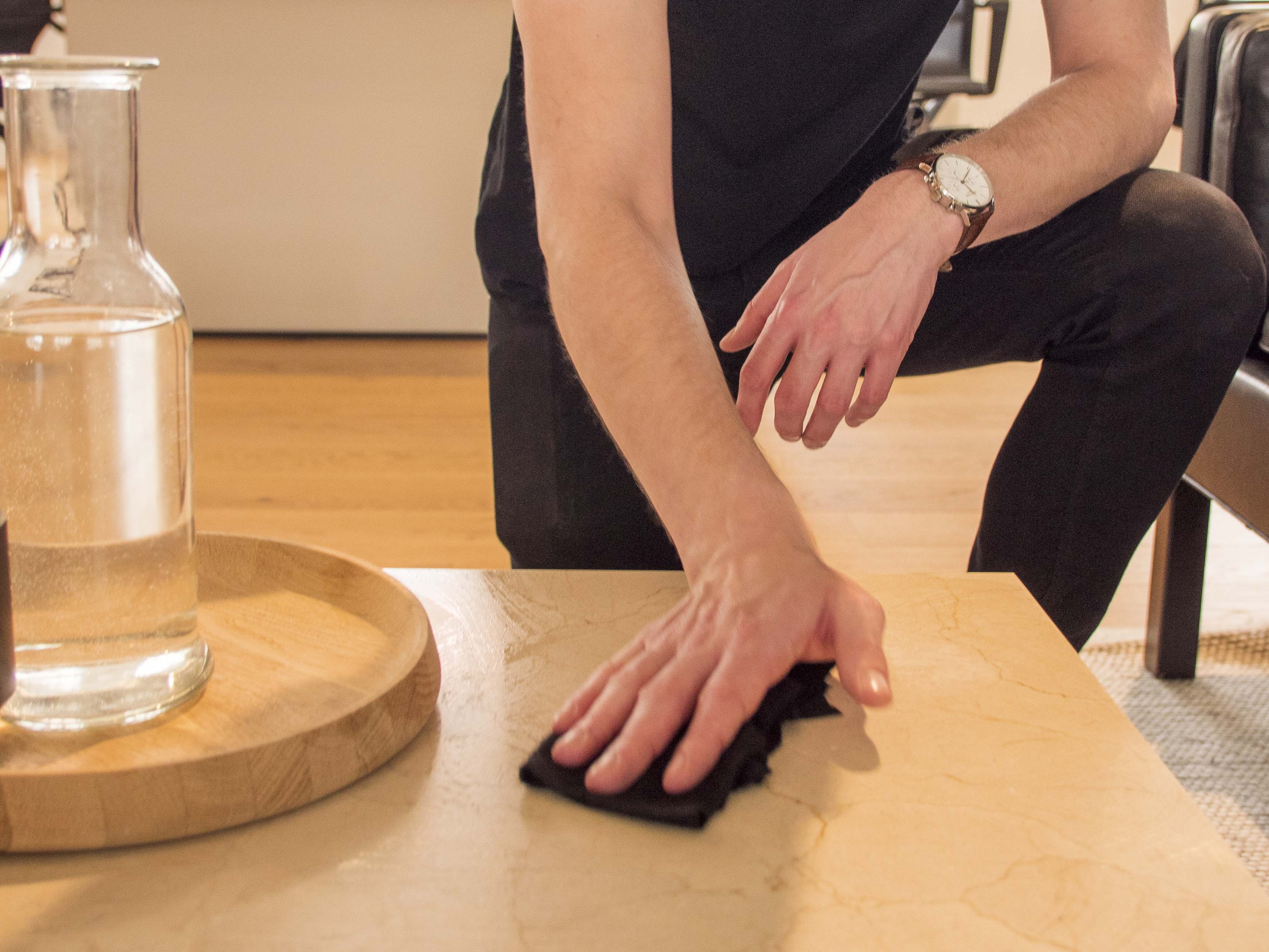
Desks and workstations collect dust. This applies especially to clear surfaces, screens, keyboards, mice, lamps, cables and shelves around the workstation.
Office cleaning becomes easier when employees keep their own workstations tidy. Piles of paper, coffee cups, loose cables and personal items make it difficult for cleaning staff to access surfaces.
A simple agreement can be that desks must be cleared on specific days. This allows the cleaning company to wipe free surfaces without moving private or confidential items.
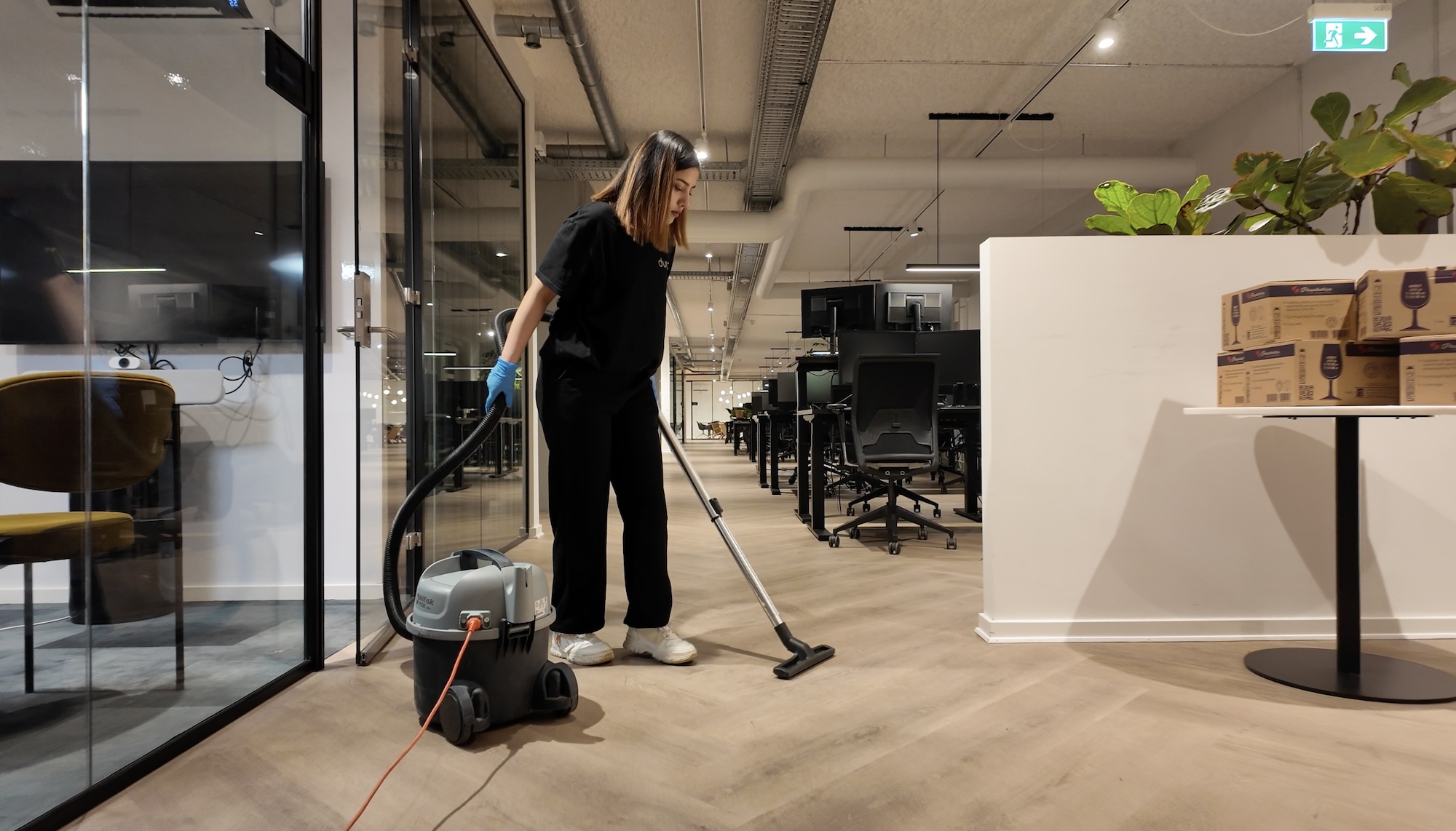
Floors collect dirt from outside, dust, particles and small traces of everyday use. Shelves, open storage and textiles can also act as dust collectors. That is why regular cleaning of office premises should include more than visible walkways.
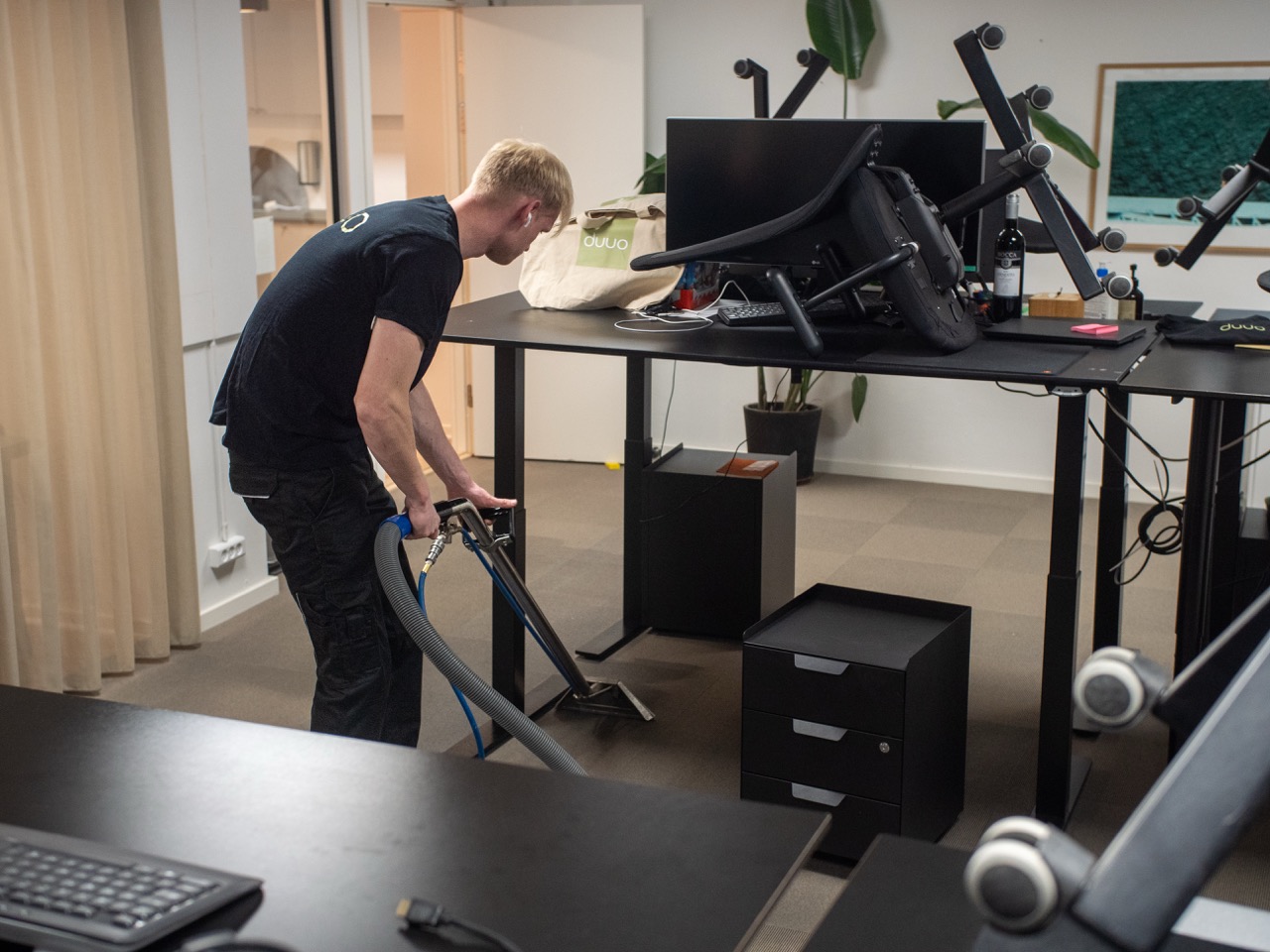
In many offices, shelves, skirting boards, corners, areas under desks and spaces around cables need to be included in the cleaning plan. Textiles can be comfortable and good for acoustics, but they can also collect dust. This applies, for example, to fabric chairs, sofas, carpets and curtains. Periodic cleaning may be relevant here.
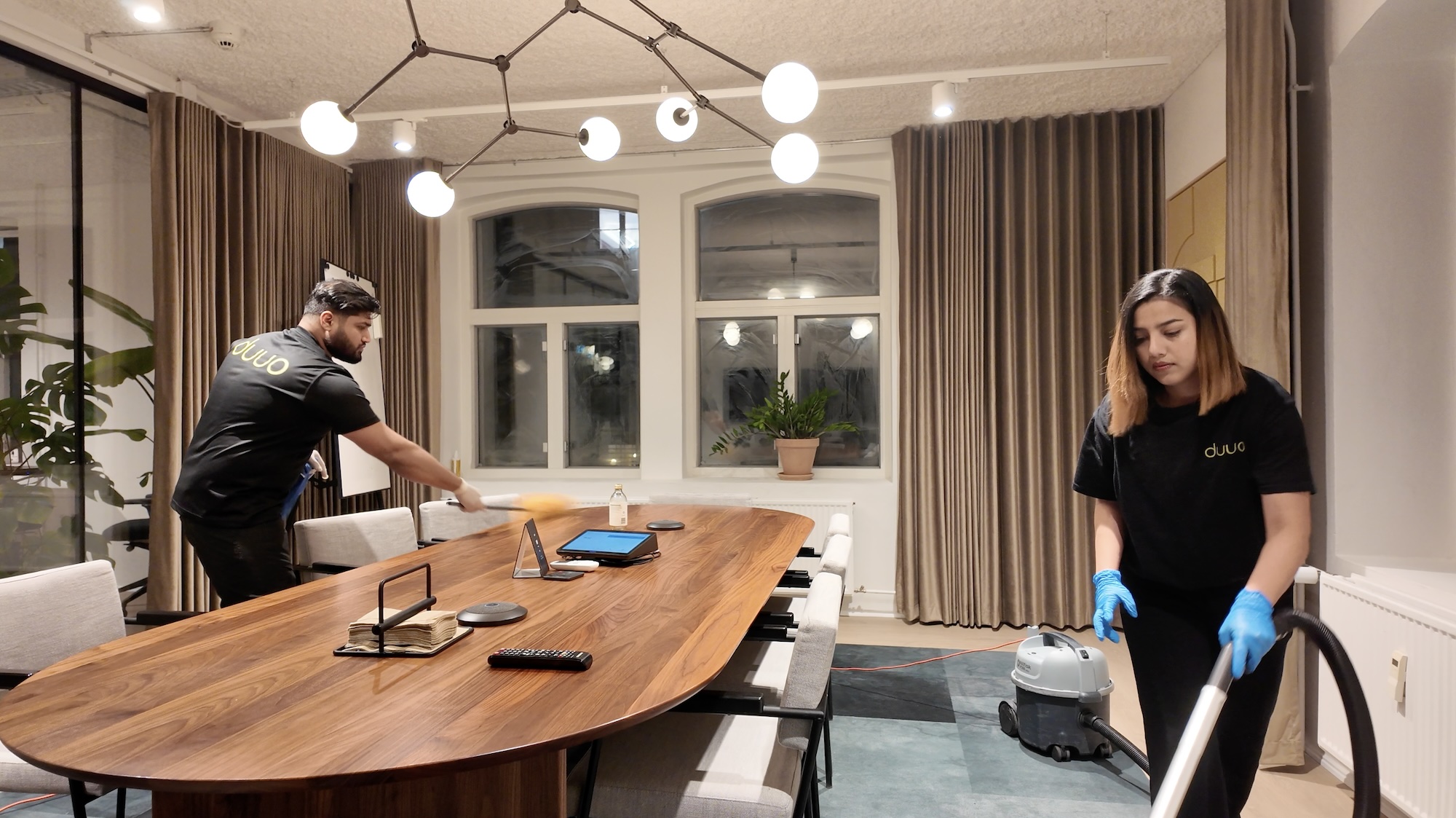
Meeting rooms are often used by many people during the day. They include many contact surfaces: tabletops, chairs, door handles, screens, remote controls, whiteboards and coffee cups.
Cleaning meeting rooms and offices should therefore be a fixed part of the cleaning agreement. Especially if the rooms are used for client meetings, workshops or internal meetings with many participants.
Kitchen facilities and toilets are often the areas where a lack of cleaning becomes visible most quickly.
In the kitchen, odours can come from waste, food leftovers, coffee machines, fridges, dishes and tabletops. In toilets, it is about hygiene, consumables, odour and the overall feeling that the workplace is being properly looked after.
Entrance areas and corridors bring dirt in from outside. Especially during rain, snow, sleet and periods with high traffic.
At the same time, corridors are often places where cardboard boxes, bags, parcels, waste or temporary storage end up. This makes cleaning more difficult and can affect the sense of order.
A tidy workplace is easier to use and easier to clean. That is why corridors and entrance areas should be included in the regular cleaning plan.
Use this checklist as a quick overview:
If you can answer yes to several of these questions, it is worth taking a closer look at your cleaning level. Sometimes, a higher frequency is needed. In other cases, clearer agreements, better tidying routines or more focus on specific areas are enough.
Duuo helps companies with office cleaning that fits their everyday work. The cleaning can be adapted to your premises, number of employees, use of meeting rooms and need for common areas.
The goal is a cleaner, tidier and more well-functioning workplace. This creates better conditions for the working environment, indoor climate and employee wellbeing.
Whether you need help with office cleaning, daily office cleaning or a fixed agreement for cleaning office premises, Duuo can help with a solution that fits your workplace.
Sources:
https://at.dk/faa-viden/siddende-og-staaende-arbejde/et-sundt-indeklima/
https://pubmed.ncbi.nlm.nih.gov/12842780/
https://pubmed.ncbi.nlm.nih.gov/14712149/
https://research.wur.nl/en/publications/impact-of-cleanliness-on-the-productivity-of-employees/
What office cleaning means for a good working environment and employee wellbeing