Internal cleaning vs. professional office cleaning
Many companies face the same question:
Should we handle cleaning ourselves – or enter into a professional cleaning agreement?
Link here to our office Cleaning service page if you want to see more about it.
There is no single correct answer. The choice depends on the company’s size, structure, level of quality expectations, and available resources.
In this article, we review the difference between internal cleaning and professional office cleaning — and the typical advantages and disadvantages that follow from the two approaches.
Internal cleaning means that the company itself handles the cleaning. This can happen in several ways:
• Employees tidy up and clean themselves
• An internal employee has cleaning as part of their role
• The company hires its own cleaning staff
The advantage is that you have full control over planning and prioritization.
The disadvantage is that responsibility — and the practical coordination — remain internal.
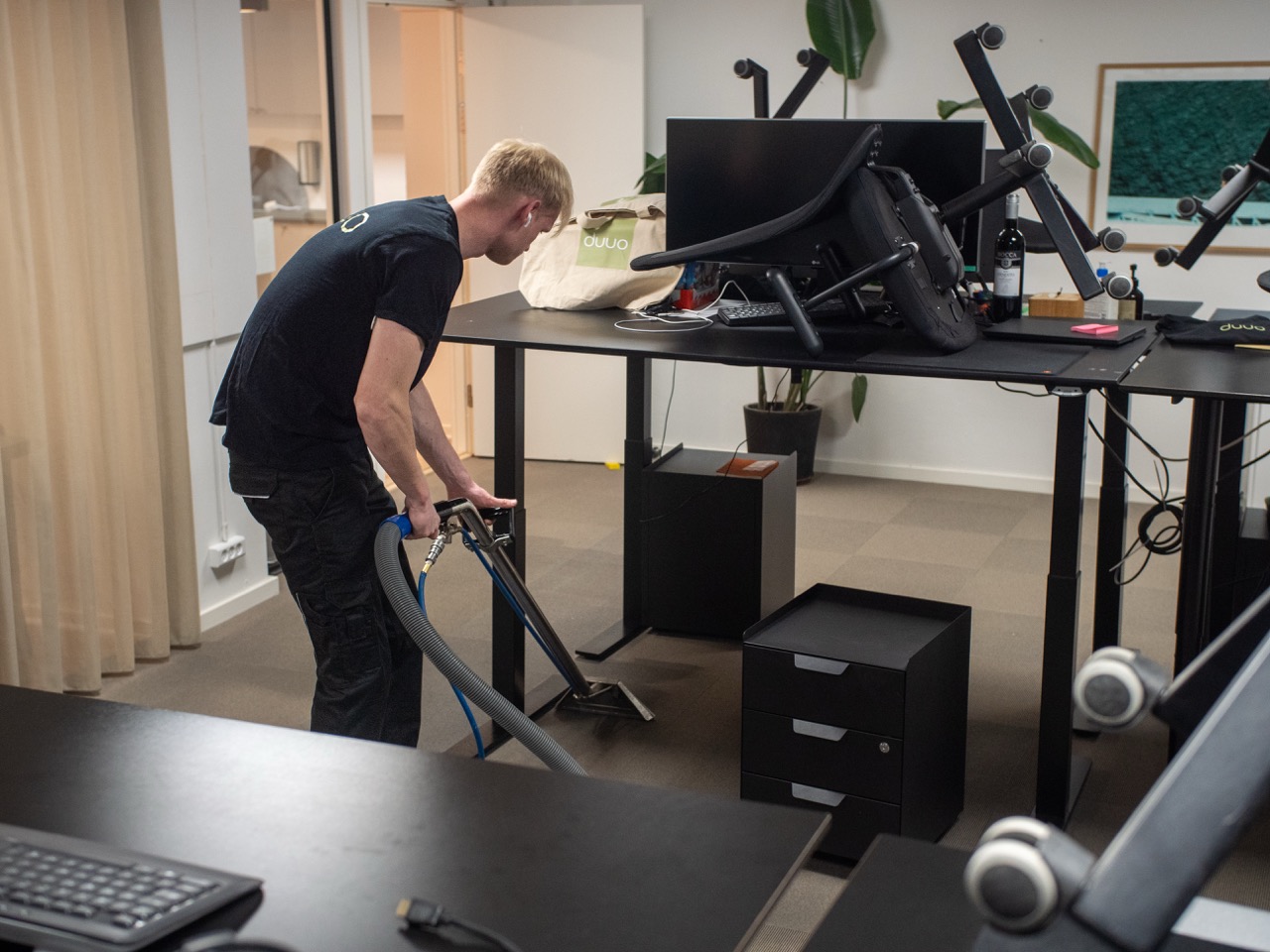
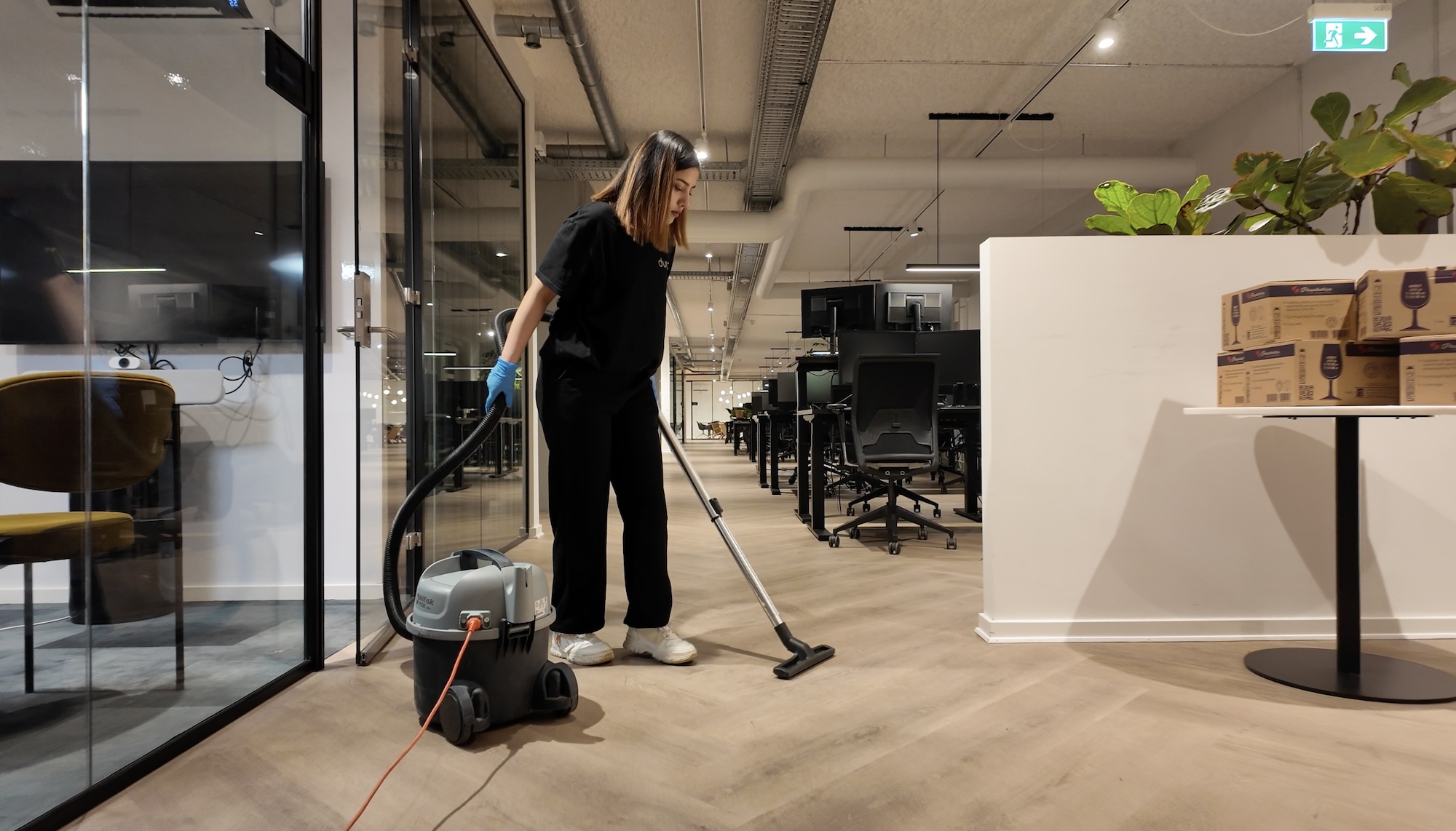
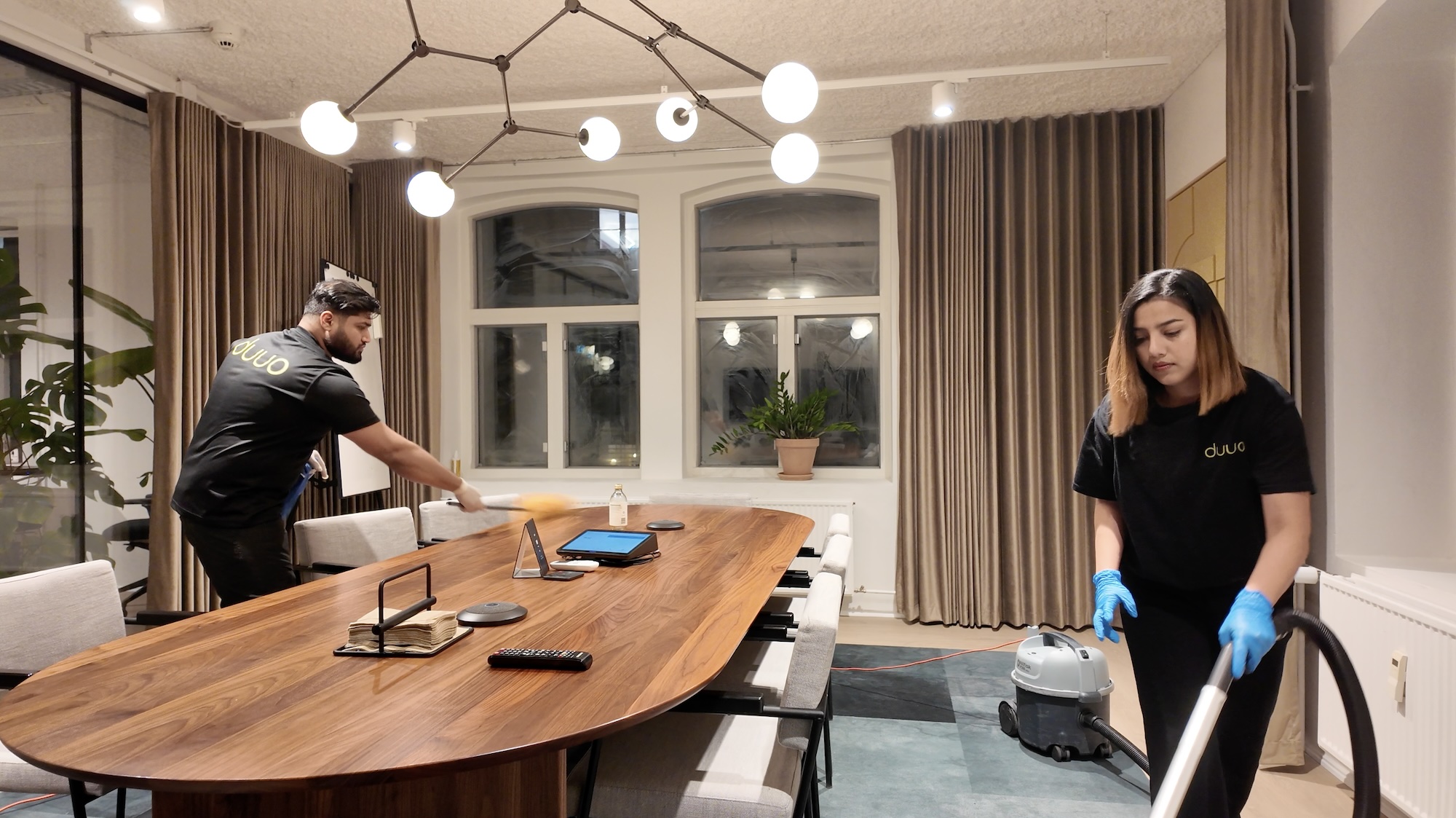
This typically includes:
• A fixed cleaning plan
• Professionally trained staff
• Coverage during illness and vacation
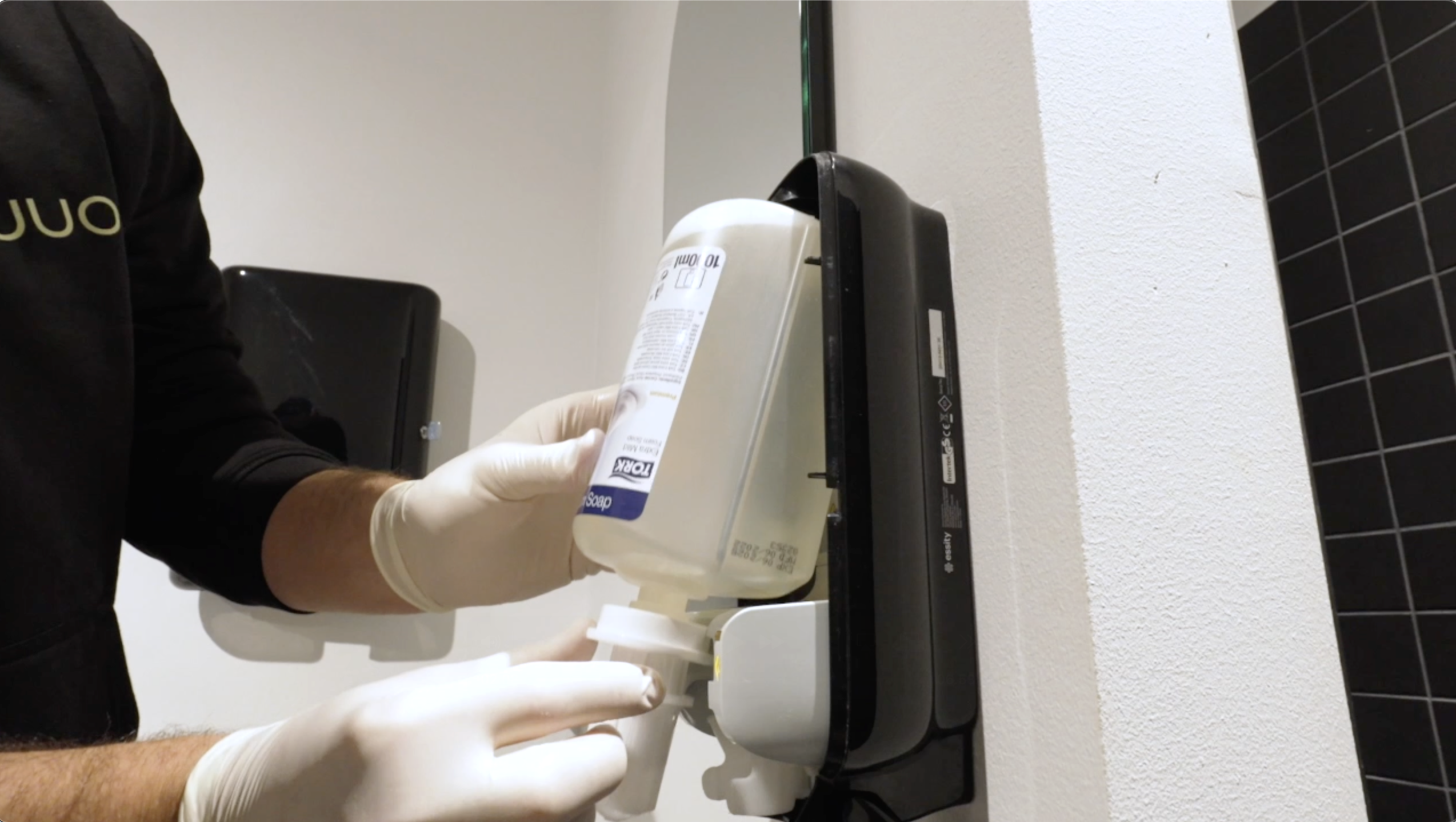
• Cleaning products and equipment included
• A dedicated contact person
Here, both execution and responsibility for quality and continuity are outsourced.


Internal cleaning vs. professional office cleaning
Below we have gathered the four areas where the difference is typically most noticeable.
With internal cleaning, planning, follow-up, and staffing lie with the company itself.
This means that illness, vacation, and changes must be handled internally.
With professional office cleaning, the supplier ensures staffing and continuity.
The company does not have to find replacements or coordinate operations.
Internal cleaning can work well, but quality often depends on the individual employee’s experience and time.
Professional cleaning solutions are based on fixed procedures, quality control, and experience from similar offices. This typically results in a more consistent standard.
Internal cleaning may initially seem cheaper, but the costs often consist of:
• Salaries and administration
• Purchase of cleaning supplies
• Machines and maintenance
• Time spent on coordination
With professional office cleaning, the cost is typically combined into one fixed agreement where materials and operations are included.
When a company grows, moves, or changes structure, the need for cleaning can change.
With an internal solution, staffing and structure must be adjusted internally.
With a professional agreement, frequency and scope can typically be adjusted without organizational changes.
Internal cleaning may make sense if:
• the company is very small
• daily usage is limited
• employees already share practical tasks
• the ambition level for cleaning is moderate
In small offices with few employees, it can be a simple and flexible solution.
Professional office cleaning is often the best solution when:
• there are many employees
• multiple people share toilets and kitchen areas
• the company receives guests or customer visits
• stable quality and continuity are desired
• internal time should be freed up
Here the focus is not only on cleaning — but also on operational reliability and a better working environment.
The choice between internal cleaning and professional office cleaning depends on:
• the size of the company
• office facilities
• the ambition level for quality
• internal resources and time
For smaller offices, internal cleaning may be sufficient.
For larger or more complex environments, a professional solution will often be more stable and long-term.
In-house cleaning is typically carried out by a company’s own employees or an internally hired cleaner. Professional office cleaning is provided by an external cleaning company that manages staff, equipment, and cleaning schedules.
Professional office cleaning often provides a more reliable solution because the cleaning company handles staffing, sick leave, equipment, and cleaning supplies. This allows businesses to focus on their core operations instead of managing cleaning internally.
In-house cleaning can make sense for smaller offices where the cleaning needs are limited, or where employees already handle small day-to-day tasks around the workplace.
The cost of office cleaning depends on factors such as office size, cleaning frequency, and the tasks included in the agreement. Many businesses choose a fixed cleaning contract with a professional cleaning provider.
Yes. Some companies use a hybrid approach where small daily tasks are handled internally, while a professional cleaning company manages the regular deep cleaning.
What Does Office Cleaning Cost?
Get an overview of office cleaning prices and the factors that influence the cost.
https://www.duuo.dk/post/what-does-office-cleaning-cost
How often should an office be cleaned?
Learn how often offices are typically cleaned depending on size and daily usage.
https://www.duuo.dk/post/how-often-should-an-office-be-cleaned
What is included in office cleaning?
See what tasks are typically included in a professional office cleaning agreement.
https://www.duuo.dk/post/what-is-included-in-office-cleaning
In-house cleaning vs professional office cleaning
Learn the difference between internal cleaning and professional office cleaning and which solution suits your company best.
https://www.duuo.dk/post/internal-cleaning-vs-professional-office-cleaning