Rules for cleaning in the workplace: A Guide for businesses
A clean office matters for employee wellbeing, workplace hygiene, and a healthy working environment. In Denmark, there are also legal requirements for workplace cleaning that companies must follow. These regulations are designed to ensure that offices and workplaces are kept clean, safe, and suitable for employees to work in.
In this guide, you will get an overview of Danish workplace cleaning regulations, employer responsibilities, and the practical requirements for office cleaning in Copenhagen. You will also find a checklist to help assess whether your office cleaning meets current workplace standards.
Danish workplace legislation sets clear requirements for cleaning and maintenance of workplaces. The rules are primarily outlined in the Danish Working Environment Authority’s regulations on permanent workplaces.
In short, the regulations state that:
These rules apply whether the business uses an in-house cleaner or a professional office cleaning company in Copenhagen.
The employer has overall responsibility for workplace cleaning and hygiene standards. This includes both practical cleaning routines and ensuring compliance with workplace health and safety regulations.
Many businesses choose to work with a professional cleaning company or office cleaning service in Copenhagen, but responsibility cannot simply be outsourced. The company must still ensure that office cleaning is carried out properly and at a level appropriate for the workplace.
Responsibilities typically include:
Workplace cleaning regulations need to be translated into practical daily routines. The required level of cleaning depends on factors such as the number of employees, office layout, shared facilities, and the type of work carried out.
Below are the key areas businesses should prioritise when planning commercial office cleaning in Copenhagen.
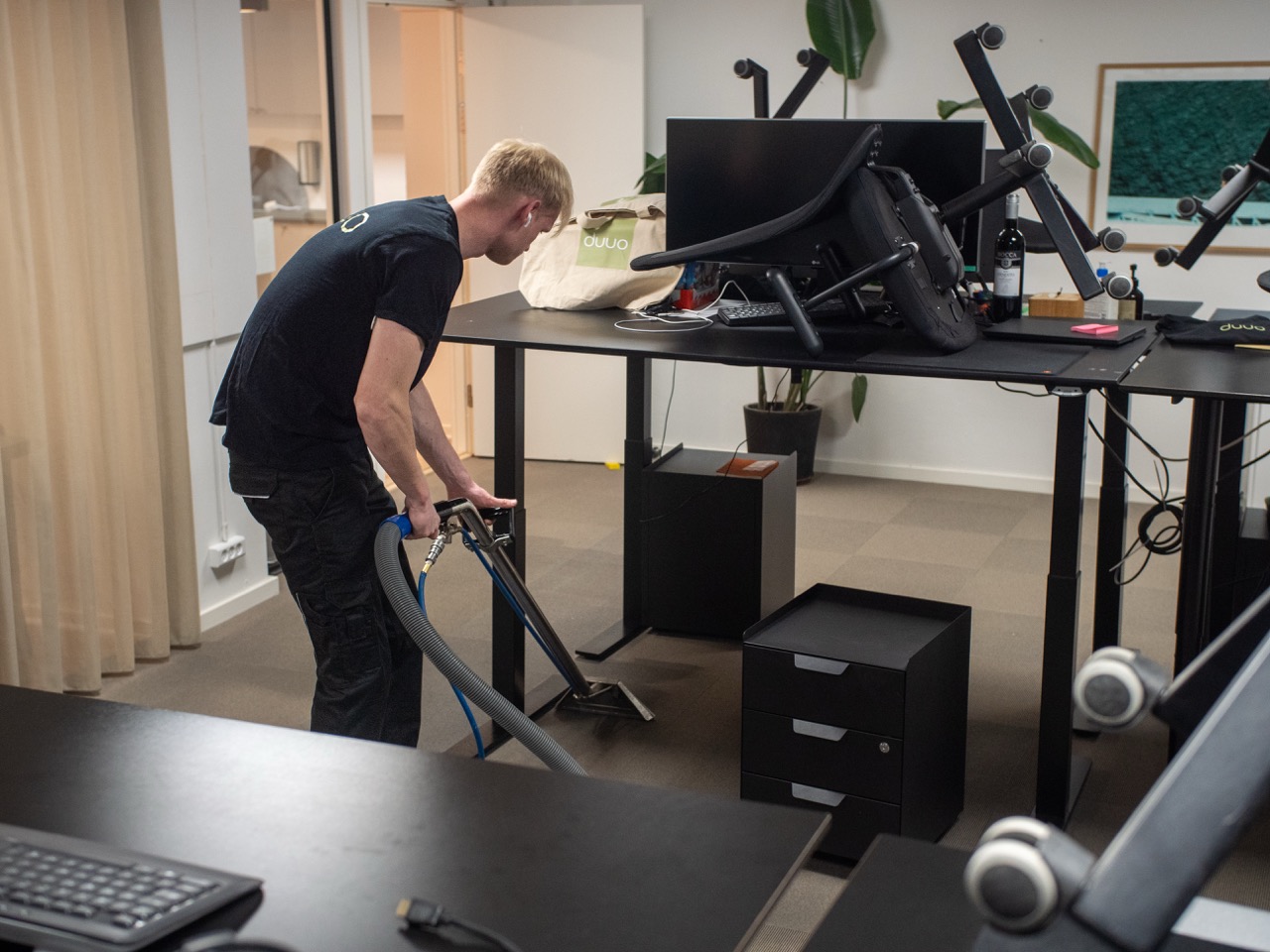
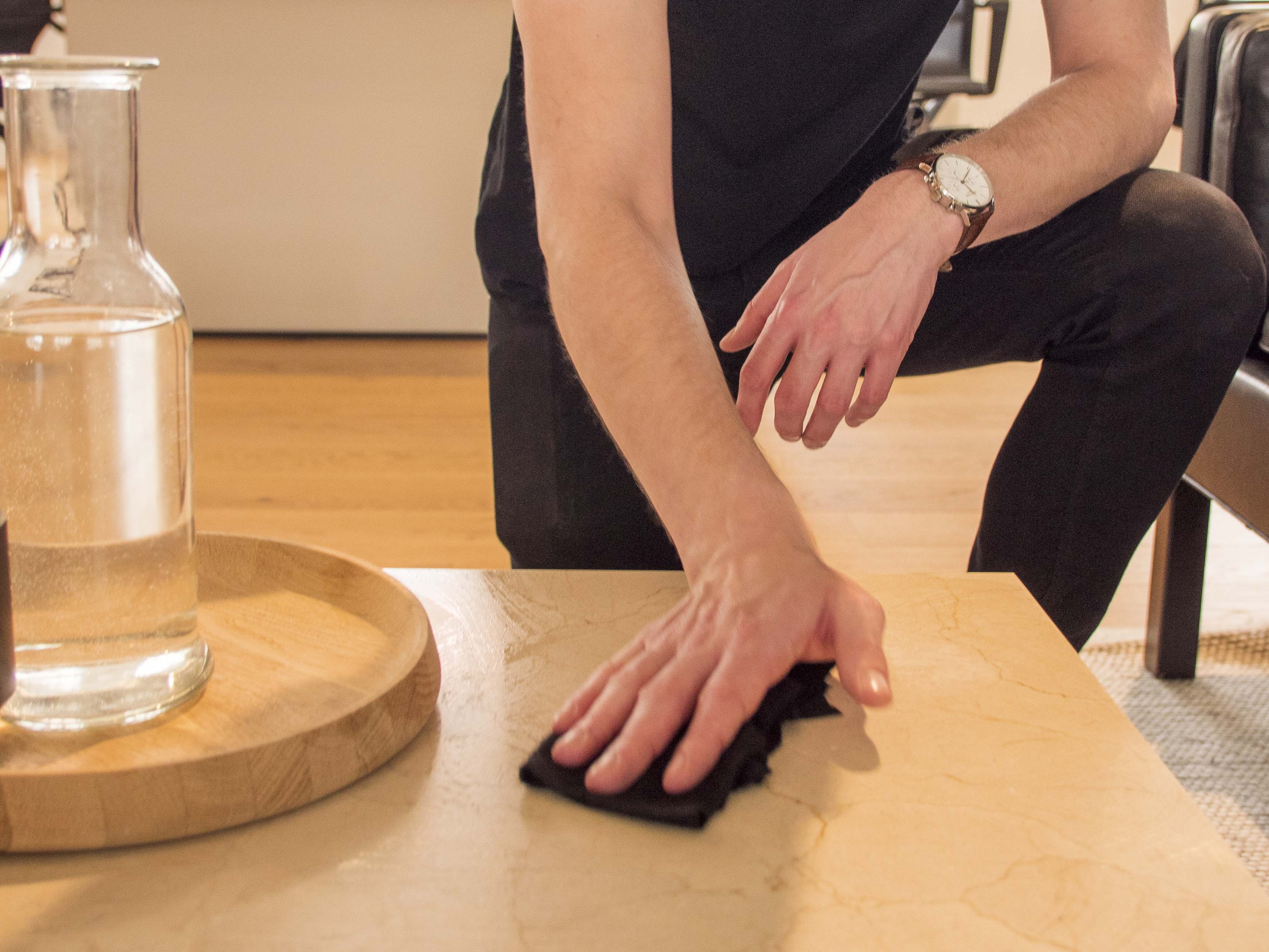
Desks and workstations quickly collect dust, food residue, and bacteria. Regular office cleaning should therefore include wiping desks, monitors, keyboards, and other high-touch surfaces.
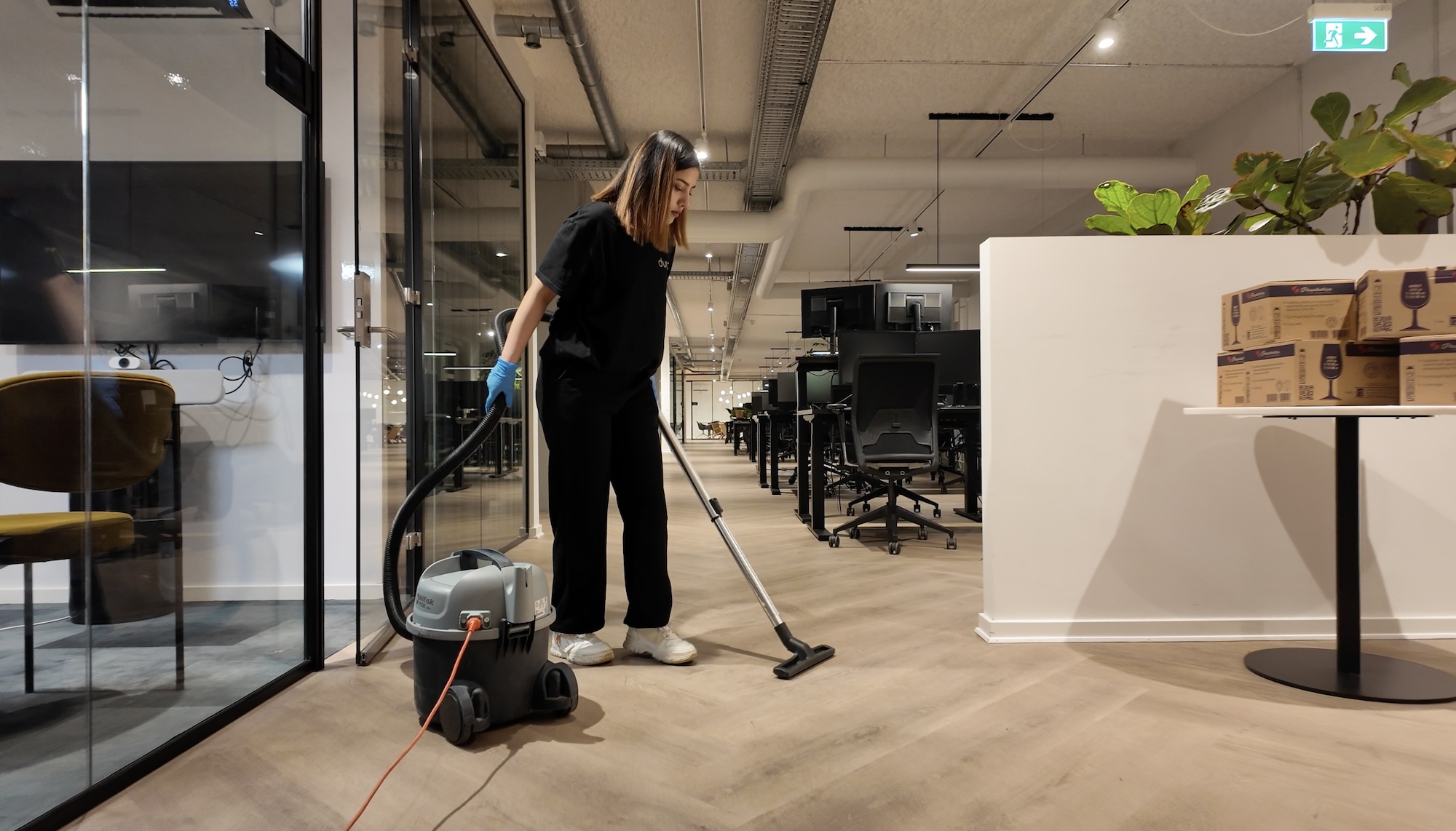
In larger open-plan offices, dust can negatively affect indoor air quality and employee comfort. Professional office cleaning helps reduce the build-up of dust and dirt while supporting a healthier working environment.
It is also important that cables, bags, and equipment do not block cleaning access or create safety risks in walkways.
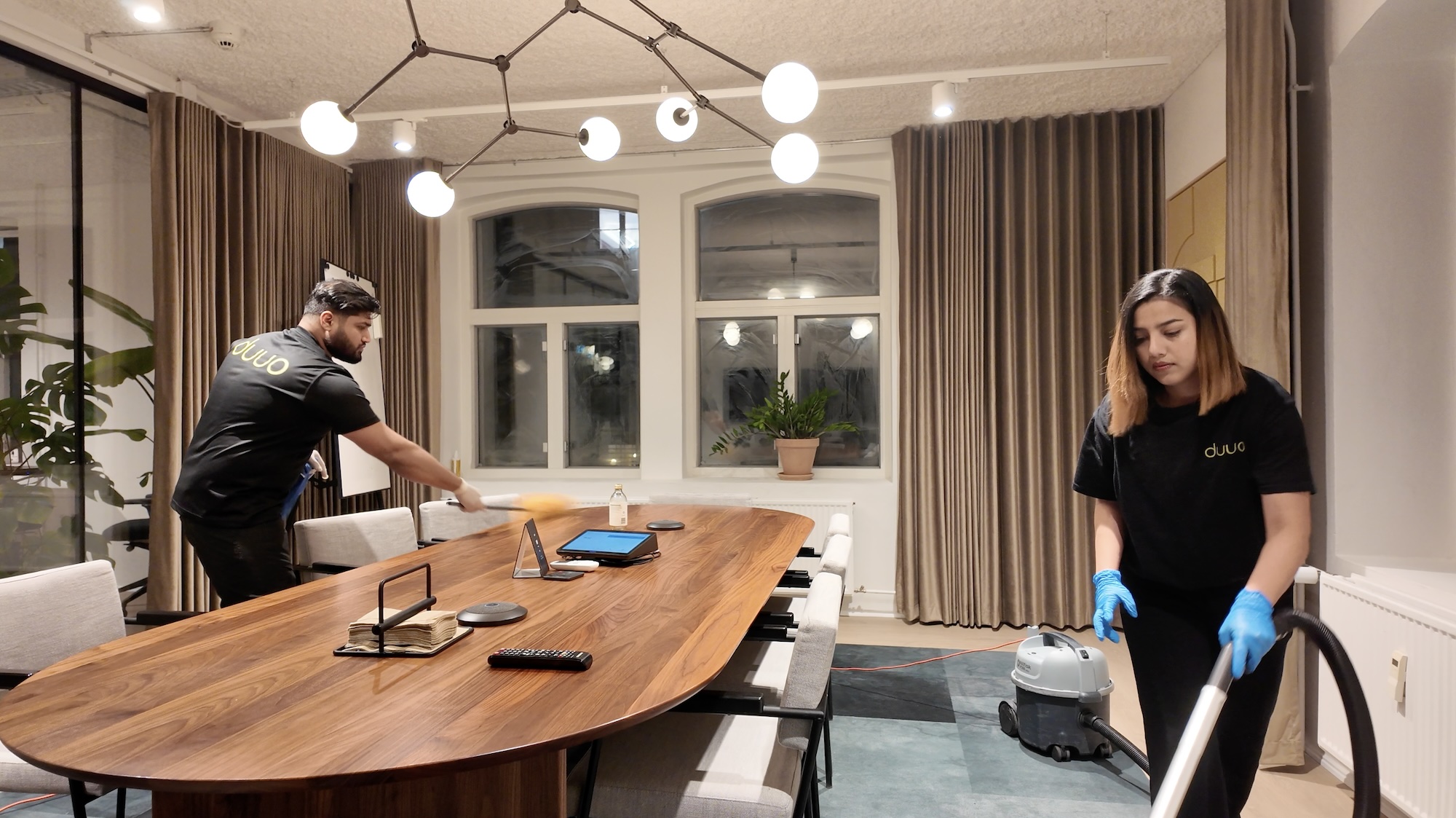
Cleaning meeting rooms should be a priority because multiple employees often share the same tables, chairs, and equipment throughout the day.
Meeting room cleaning should focus on:
Professional office cleaning services are especially beneficial in busy meeting rooms with high daily usage.
Office kitchens and staff kitchens require extra attention. Food residue, moisture, and bacteria can quickly create unhygienic conditions.
In practice, businesses should ensure:
Daily office cleaning is often necessary in shared kitchen facilities, especially in larger workplaces.
Toilets and washrooms must always be kept clean and hygienic. This is a basic legal requirement in workplace regulations.
Washroom cleaning should include:
Sanitary areas require fixed cleaning schedules and regular inspections.
Hallways and emergency exits must remain clean, uncluttered, and safe to use.
This means:
Shared touchpoints are used by many people throughout the day, including:
Workplace cleaning routines should include regular disinfection and cleaning of these areas, especially during periods of increased illness or infection risk.
Danish regulations do not specify exact cleaning frequencies, but workplaces must remain clean and hygienic based on usage and workload.
In practice, the following areas usually require frequent or daily cleaning:
Many businesses choose a fixed office cleaning agreement with a commercial cleaning company in Copenhagen to ensure consistent quality and reliable cleaning schedules.
Cleaning frequency depends on:
Large office spaces and shared work environments typically require more frequent cleaning than smaller offices.
Cleaning products must always be used safely. This applies both to in-house cleaning and outsourced office cleaning services.
If hazardous chemicals are used, the company must carry out a chemical risk assessment as part of its workplace assessment and health and safety procedures.
Businesses should also ensure:
Where possible, businesses should choose environmentally friendly cleaning products and avoid unnecessary use of harsh chemicals, sprays, and chlorine-based products.
Indoor air quality can be affected by fragrances, fumes, and chemicals from cleaning products, which is why professional cleaning companies should always consider employee wellbeing and office air quality.
Office cleaning has a significant impact on indoor air quality, employee comfort, and workplace wellbeing. Dust, dirt, and poor hygiene can negatively affect concentration, comfort, and the overall office environment.
Regular office cleaning can help:
Cleaning meeting rooms and shared office spaces is especially important where many employees use the same facilities and surfaces throughout the day.
A clean office also creates a better impression for clients, visitors, and business partners.
Many companies in Copenhagen choose professional office cleaning services to ensure consistent routines and reliable cleaning standards. A clear cleaning agreement also makes it easier to define responsibilities, scope, and cleaning frequency.
Use this checklist to assess whether your office cleaning meets workplace cleaning regulations and hygiene standards.
Danish workplace regulations state that workplaces must be kept clean, tidy, and safe from a health and safety perspective. The rules cover cleaning, hygiene, safety, and the working environment. Employers must ensure that dust, dirt, and unhygienic conditions are limited so employees can work in a healthy and safe office environment.
The employer has overall responsibility for workplace cleaning, even if the company uses an external cleaning company or professional office cleaning service. It is the company’s responsibility to ensure that office cleaning is carried out properly and that the working environment complies with Danish workplace regulations.
An office should be cleaned often enough to keep the workplace clean, hygienic, and safe. Toilets, shared areas, and high-touch surfaces typically require frequent or daily cleaning, while other areas can be cleaned as needed. Cleaning frequency depends on the number of employees, how the office is used, and the type of workplace.
Toilets, office kitchens, high-touch surfaces, meeting rooms, and shared areas are especially important in office cleaning. These are areas where many employees use the same surfaces throughout the day. Hallways, sinks, desks, and workstations should also be part of regular office cleaning routines.
Tidying is about order, organisation, and removing waste or objects from the workplace. Cleaning is about removing dust, dirt, bacteria, and impurities from surfaces, floors, and touchpoints. Both are important for a healthy working environment and a well-functioning office.
Yes. If hazardous chemicals are used, the company must carry out a chemical risk assessment as part of its workplace health and safety procedures. Employees must also be instructed in the correct use of cleaning products, and the company should have access to safety data sheets and product information for relevant cleaning products.
Yes. Regular office cleaning can reduce dust, dirt, and bacteria in the workplace. This can help improve indoor air quality and create a more comfortable working environment for employees. A clean office can also support wellbeing, concentration, and a more professional impression for clients and visitors.
An office cleaning agreement should describe the scope, frequency, responsibilities, and areas to be cleaned. It should also specify which tasks the cleaning service or cleaning company will carry out, and how often shared areas, meeting rooms, toilets, and kitchen facilities should be cleaned.
Kilder:
https://at.dk/regler/bekendtgoerelse-om-faste-arbejdssteders-indretning-sammenskrivning/
https://bfakontor.dk/materialer/fakta-om-kontorarbejdspladsen/rengoering-og-oprydning
https://bfakontor.dk/materialer/fakta-om-kontorarbejdspladsen/rengoering-og-oprydning/det-siger-loven
https://at.dk/faa-viden/arbejde-med-kemi-og-biologi/kemisk-risikovurdering/
https://regler.at.dk/kemisk-risikovurdering-rengoeringsmidler/
https://www.godtarbejdsmiljo.dk/krop-og-sundhed/sund-hud/forebyg-i-risikoerhverv/rengoering
https://www.foa.dk/~/media/faelles/pdf/faggruppesider/kostservice/rengoeringogarbejdsmiljoepdf.pdf
https://www.godtarbejdsmiljo.dk/media/zzipwsg4/faktaark-rengoering-final.pdf
Rules for cleaning in the workplace: A Guide for businesses