Indoor climate in the workplace: Why office cleaning is an important factor
The indoor climate in the workplace is affected by several things at once. Air, temperature, cleaning, ventilation, light, noise and moisture all play a role.
In an office, the indoor climate is quickly noticeable. If the air feels heavy, dust builds up, the temperature fluctuates, or shared areas are not kept clean, it can affect both wellbeing and the working environment.
The employer has overall responsibility for ensuring that the indoor climate in the office is satisfactory. But management, employees and good cleaning routines all make a difference in everyday working life.
A good indoor climate in the office requires several things to work together. These are the most important factors.
The air in an office is affected by people, exhaled air, moisture, body odours, dust, printers, furniture, building materials and cleaning products. If more substances are added to the air than are removed, the air may feel heavy or poor.
Ventilation is therefore important. The Danish Working Environment Authority describes ventilation as a central measure for a healthy and comfortable indoor climate. Polluted air must be replaced with fresh air, and the air exchange must match the activities taking place in the room.
In an office, poor air quality may be caused by:
Good ventilation can be natural or mechanical. The most important thing is that the air is actually replaced and that the ventilation is maintained.
As a general rule, the temperature in the office should be around 20 to 22 degrees. Typically, more people will experience symptoms of poor indoor climate at 23 degrees or above, and the temperature for sedentary work under normal climate and working conditions must not exceed 25 degrees.
Temperature is experienced differently. Some people feel cold, while others feel warm in the same room. It is therefore a good idea to talk about what works in your specific premises.
Draughts can come from windows, doors, airing or ventilation systems. They may also occur if workstations are placed close to cold surfaces or airflows. In open-plan offices, it can be difficult to find a solution that suits everyone. Here, the placement of workstations and adjustment of ventilation can make a difference.
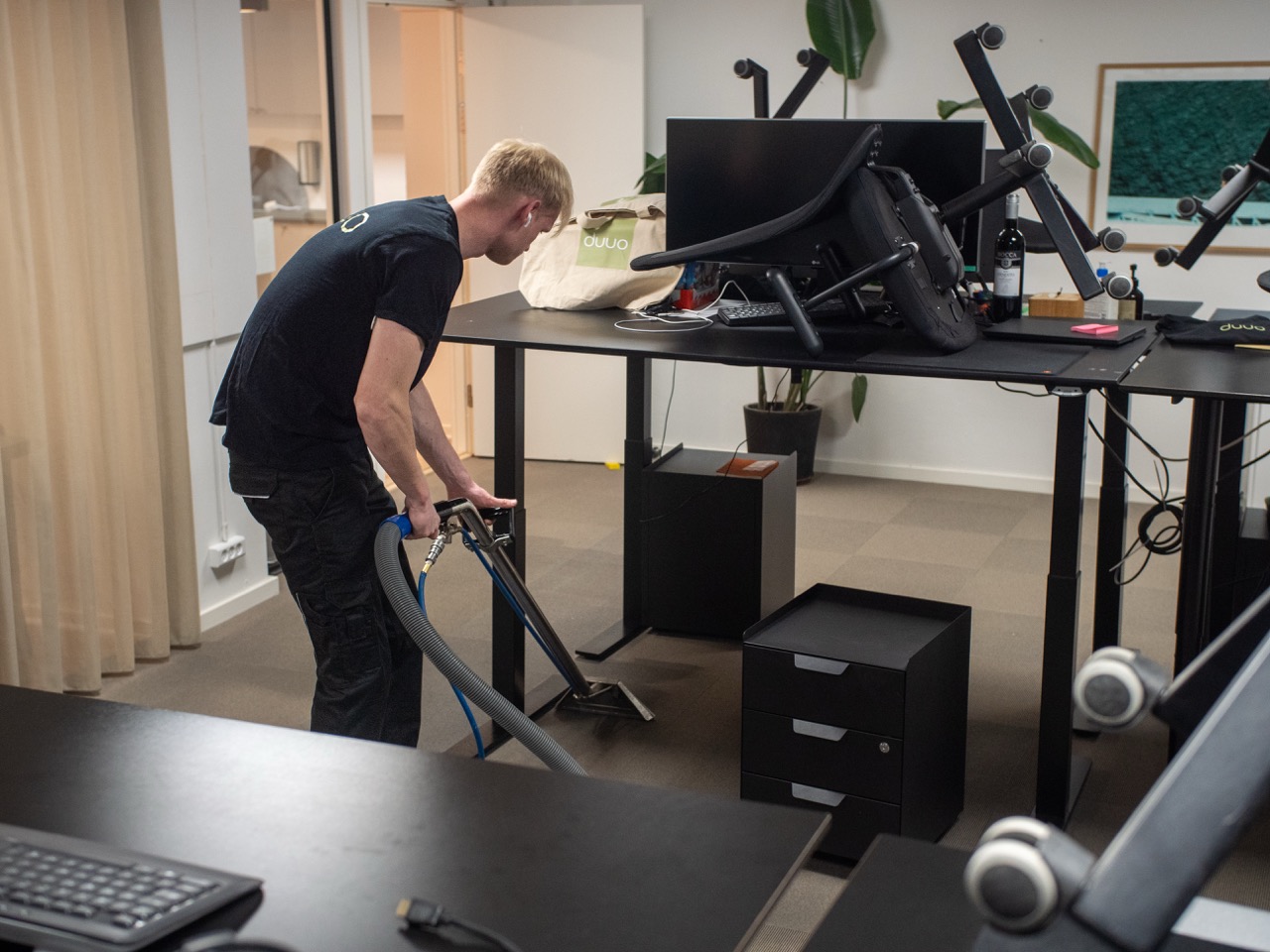
Cleaning has a major impact on the indoor climate. The Danish Working Environment Authority recommends thorough cleaning to minimise dust in the air and points out that employees should keep their workstation tidy so it is easy to clean.
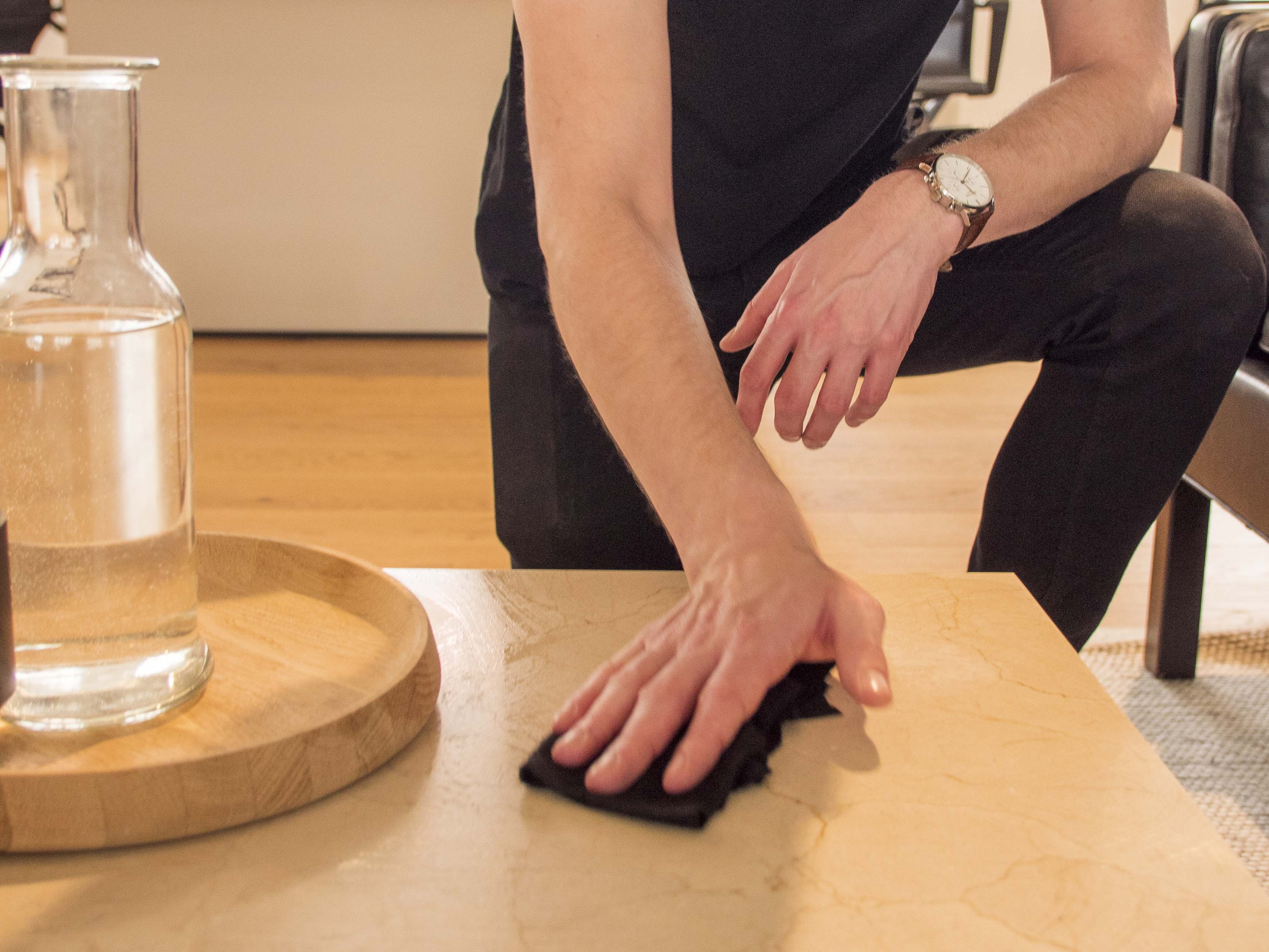
Dust collects on floors, desks, shelves, textiles, cables, windowsills and other surfaces. The more clutter there is, the harder it becomes to clean. Cleaning-friendly interior design is therefore important.
Rules about dust in a workplace are, in practice, about preventing unnecessary exposure and ensuring a healthy physical working environment. In a standard office, problems are typically caused by dust from everyday use, paper, textiles, floors, furniture and dirt brought in from outside.
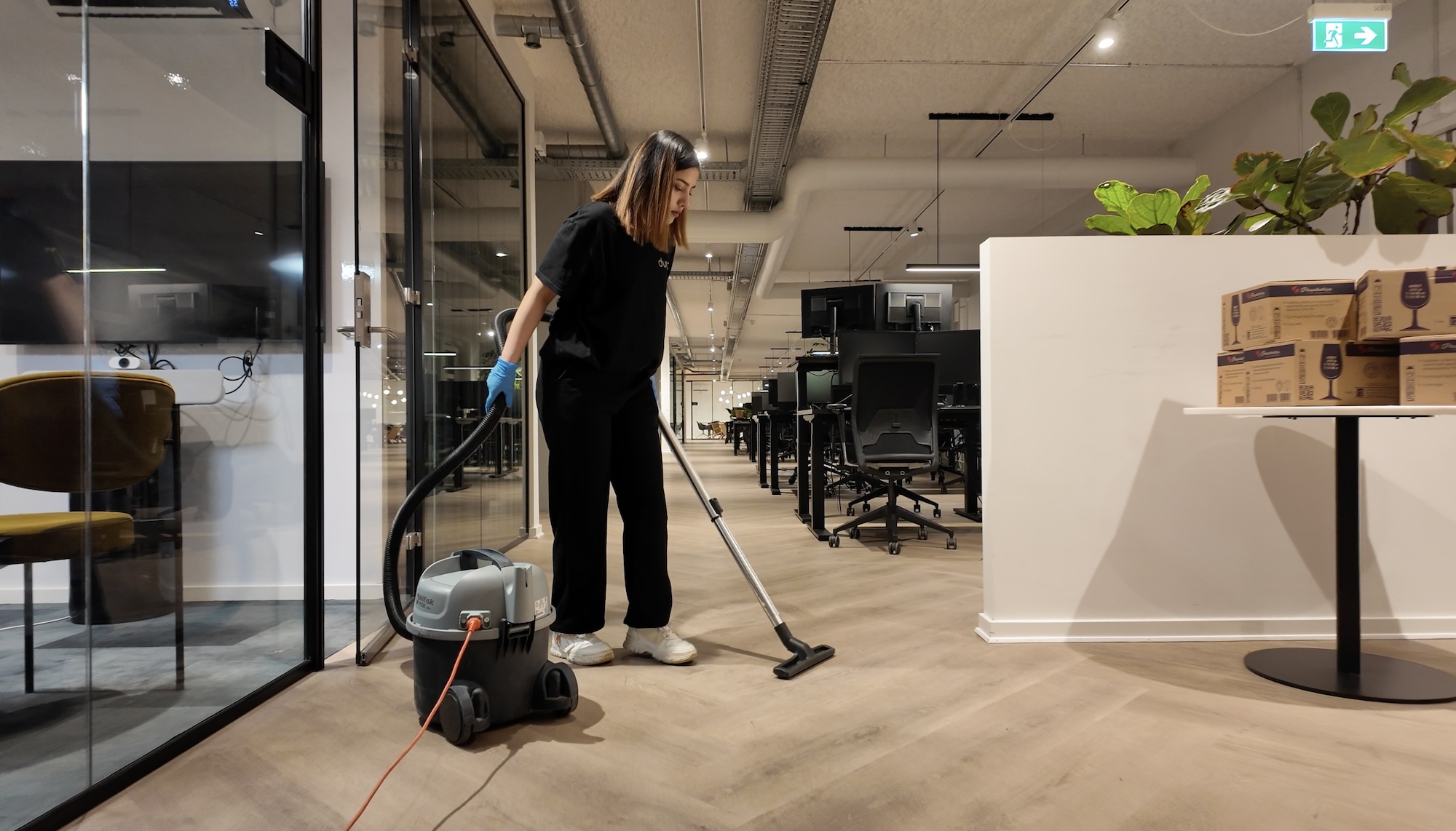
Effective office cleaning requires clear surfaces, fixed routines and clear agreements. This is especially true for cleaning in open-plan offices, where many employees share the same air, walkways, contact surfaces and equipment.
Moisture can create conditions for mould and bacteria to grow. Visible signs of moisture damage or mould growth first and foremost require the source of moisture to be removed. The moisture damage must then be repaired.
Cleaning cannot solve moisture problems on its own. If there is moisture damage, mould or a persistent smell of damp, the cause must be found and removed. After that, cleaning can be part of the overall effort to keep the building clean and usable again.
Light also affects the working environment. According to the Danish Working Environment Authority, workrooms must have daylight and the possibility of a view. Artificial lighting must be arranged so that work and movement can take place safely, and the lighting must not cause glare or disturbing reflections.
In offices, problems may arise from:
Good screen placement, sun shading and suitable work lighting can make the office more comfortable to work in.
Noise is part of the perceived indoor climate. In offices, noise often comes from conversations, phones, printers, coffee machines, people moving through the space and meetings. In shared offices, even quiet speech can be disturbing, especially during tasks that require concentration.
Good solutions may include:
Noise, clutter, poor air and dust can together create the impression of an office that does not work well. The indoor climate should therefore be seen as a whole.
A poor indoor climate in the workplace can show itself in several ways. Headaches, difficulty concentrating and reduced efficiency are among the issues that should be taken seriously.
The symptoms may have causes other than the indoor climate. But it is relevant to look more closely at the office if the problems arise after longer periods at work and disappear during weekends or holidays.
Typical signs may include:
It is a good idea to take employees’ experiences seriously. Even when the cause is not immediately clear.
The indoor climate is often linked to several factors at once. The solution may therefore be a combination of better ventilation, more thorough cleaning, better temperature control and clearer shared agreements.
The employer has overall responsibility for ensuring that the indoor climate is satisfactory and that the setting is healthy and comfortable to spend time in.
At the same time, everyone in the office affects the indoor climate in everyday life. Employees can help by keeping their own workstation tidy, airing rooms according to agreed routines, limiting the use of perfume, placing items sensibly and making sure cleaning staff can access the areas that need cleaning.
The indoor climate should also be mapped as part of the company’s workplace assessment, including every three years and in connection with significant changes, such as moving to new premises.
Responsibility should therefore be clearly divided:
Cleaning and indoor climate are closely connected. Dust, dirt, waste and clutter affect both air quality and the experience of the office.
The Danish Working Environment Authority recommends that the office is arranged so it is easy to clean, and that cleaning products are chosen so they do not release unpleasant odours or dangerous substances into the air. The use of perfumed cleaning products should therefore be limited.
For companies, this means that professional cleaning should be more than a practical service. It should be part of a fixed plan to keep the workplace clean, tidy and pleasant to spend time in.
It is especially important that:
If cleaning staff cannot access the areas that need cleaning, the effect quickly decreases. A cleaning agreement should therefore also describe what employees need to do themselves.
This can be as simple as clearing desks, removing used cups and plates, and keeping floors free from bags, boxes and cables.
Many improvements do not require major projects. You can achieve a lot with fixed routines and clear agreements.
Here is a practical list:
Read also our guide: How to keep the office clean between cleaning visits.
Professional help may be relevant when the existing cleaning no longer matches how the office is used.
This may be the case when:
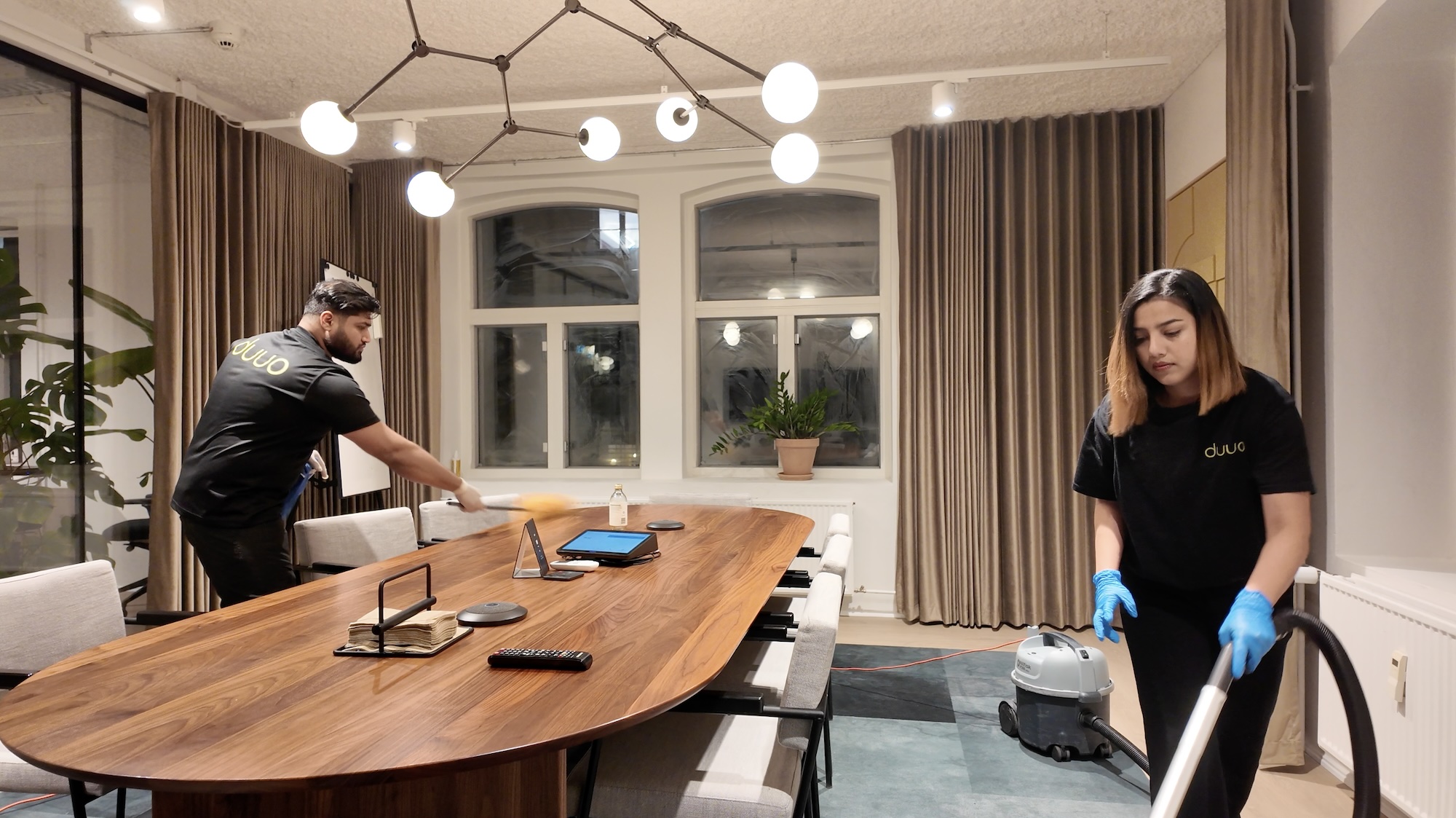
A cleaning company can help create fixed routines for cleaning office premises, meeting rooms and offices, kitchens, toilets, floors, waste areas and shared spaces.
Daily office cleaning may be relevant if the workplace has many employees, frequent visitors and shared areas with high use. In other companies, a lower frequency may be enough. It depends on the premises and everyday use.
Duuo’s target audience is often companies that want a simple and stable solution. Here, professional office cleaning, commercial cleaning or company cleaning can make it easier to keep the workplace clean and usable without placing the task on employees.
A good cleaning agreement makes the tasks clear. It should describe which areas are cleaned, how often cleaning takes place, and which tasks are included. Here is an overview of different areas and why they matter for the indoor climate:
Floors - Dust, dirt and particles collect here
Desks - Clear surfaces are easier to clean
Shelves and surfaces - Dust can build up
Meeting rooms - Many users create many contact surfaces
Kitchen - Odours, waste and food leftovers affect everyday life
Toilets - Hygiene and general wellbeing
Waste - Overfilled bins can cause odours and clutter
Cleaning products - Odours and chemical exposure should be limited
Printer areas - Printers can contribute to dust, heat and air discomfort
Open-plan office - Many people share air, surfaces and common equipment
A cleaning agreement can also describe what employees need to do so the cleaning can be carried out effectively. This may include:
In this way, cleaning service becomes part of the company’s regular operations. It creates better conditions for effective office cleaning and a more stable cleaning standard.
Use this checklist as a quick overview.
If you answer no to several points, it may be time to look at your routines. Start with the most concrete areas: cleaning, tidying, airing, temperature and the places where employees experience the most issues.
If you want better control of office cleaning, a fixed cleaning agreement can make it easier to keep dust, dirt, waste and shared areas under control.
At Duuo, we help companies with office cleaning that fits everyday life in the workplace. This may include regular office cleaning, daily office cleaning, cleaning in open-plan offices or a complete solution for cleaning office premises.
You get an agreement where tasks, frequency and expectations are clear. This makes it easier to keep the office clean and create conditions that support a better indoor climate.
A good indoor climate in the workplace is mainly about good air quality, suitable temperature, a good cleaning standard, ventilation, light, sound and the absence of moisture problems. In an office, tidiness and cleaning are also important because dust and dirt can affect air quality.
As a general rule, the temperature in an office should be around 20 to 22 degrees. For sedentary work under normal conditions, the temperature must not exceed 25 degrees, and it should not fall below 18 degrees.
There is no fixed cleaning frequency that suits every office. The need depends on the number of employees, the size of the premises, the use of meeting rooms, shared kitchens and toilets, and how quickly dust and dirt build up. Many companies need daily office cleaning in selected areas and periodic cleaning of other surfaces.
Yes, dust can affect air quality and cause discomfort. Dust collects especially on floors, desks, shelves, textiles and other surfaces. Insufficient cleaning can contribute to dust in the air, which is why cleaning is an important part of working with the indoor climate.
Sources
https://at.dk/faa-viden/siddende-og-staaende-arbejde/et-sundt-indeklima/
https://at.dk/faa-viden/arbejde-med-kemi-og-biologi/ventilation/
https://bfakontor.dk/fysisk-arbejdsmiljoe/indeklima/indeklima-vejledning
https://bfakontor.dk/media/tskdw5se/indeklima-pa-kontoret.pdf
https://www.godtarbejdsmiljo.dk/din-arbejdsplads/kontor/saerlige_risici
https://www.godtarbejdsmiljo.dk/din-arbejdsplads/kontor/love_og_regler
https://www.godtarbejdsmiljo.dk/stoej-lys-luft/roller-og-ansvar/apv/indeklima-og-apv
https://www.sst.dk/vidensbase/forebyggelse/forurening-og-miljoe/indeklima
Indoor climate in the workplace: Why office cleaning is an important factor